





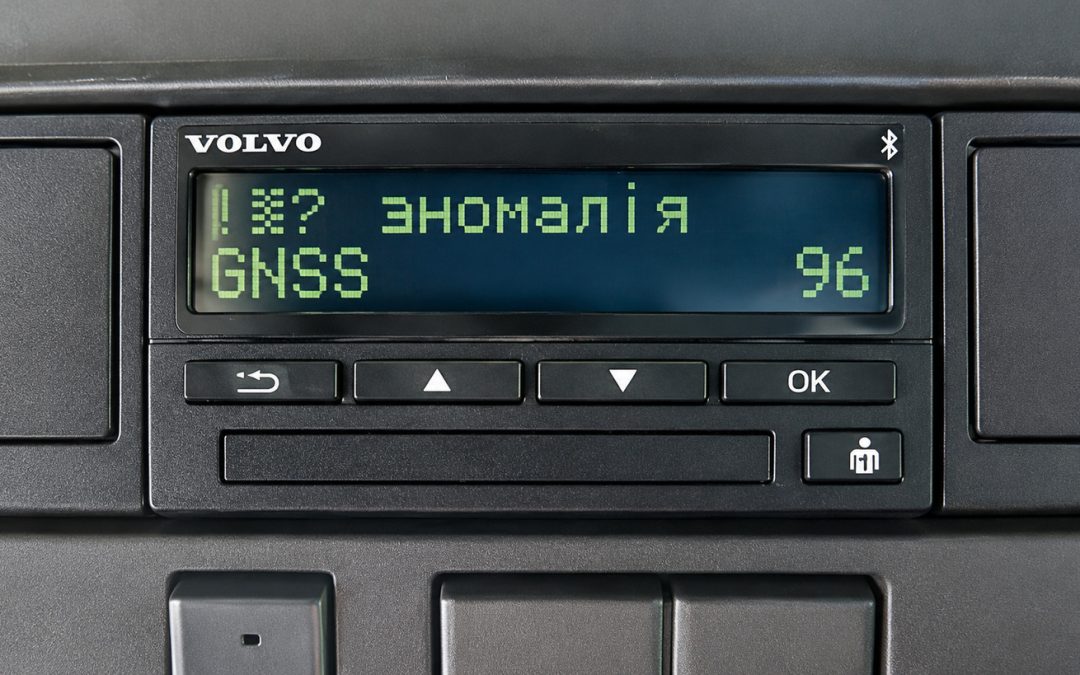
A GNSS anomaly event 96 on a smart tachograph indicates that the recording unit has detected an unexpected disruption, conflict, or irregularity within the satellite positioning data. Seeing this notification on the dashboard does not mean that the tachograph has suffered total hardware failure, nor does it immediately stop the device from recording standard driving, break, and rest periods. The presence of Event 96 does not automatically prove deliberate vehicle tampering, though enforcement officers may examine the record closely during roadside checks.
Determining the correct response depends on whether the warning is a brief reception drop caused by external surroundings or an ongoing technical fault requiring formal workshop diagnosis. Establishing prompt manual records, noting surrounding conditions, and notifying fleet operators protects professional standing while keeping transport operations aligned with UK commercial vehicle standards.
What Is a GNSS Anomaly on a Smart Tachograph?
Modern commercial transport relies on Global Navigation Satellite System technology to log geographical coordinates automatically at defined points during a journey. Smart tachographs, fitted to heavy goods vehicles and passenger service vehicles, use these satellite signals to calculate positions during daily work periods, country border crossings, and accumulated driving intervals. When the receiver detects inconsistent satellite positioning figures, an alert is triggered in the vehicle unit memory.
Unlike earlier digital recording units that relied solely on manual inputs and gearbox sensors, smart tachograph systems compare multiple data feeds to maintain geographical integrity. When satellite data behaves erratically or conflicts with anticipated positioning paths, the vehicle unit flags an anomaly rather than an ordinary hardware defect.
GNSS stands for Global Navigation Satellite System, an overarching term encompassing satellite constellations such as GPS and Galileo that provide automated geographical location points to smart tachographs.

Satellite positioning receivers mounted on modern commercial vehicles constantly communicate with positioning networks during transit.
What Does Tachograph Event 96 Mean?
Event 96 designates an operational occurrence where the internal monitoring software identifies abnormal satellite behaviour or failed signal integrity. In smart tachographs, this specific alert is catalogued under the system memory as an anomaly rather than an outright component breakdown. The device continues to operate its primary timekeeping clocks, but it alerts the driver that geographical positioning data cannot be trusted at that specific moment.
The tachograph unit flags this code when incoming satellite radio waves exhibit characteristics distinct from standard orbital signals. This can occur when secondary validation protocols, such as authentication checks on newer smart tachographs, detect unverified messages or unexpected frequency disturbances.
- Captures operational conditions without hardware damage
- Allows continued measurement of vehicle speed and movement
- Stores an event timestamp in internal mass memory
Standard Event Recording
- Indicates component breakdown or internal sensor disconnection
- May halt standard recording functions entirely
- Demands immediate repair booking under regulatory timeframes
Hardware Fault Detection
Why Does a Smart Tachograph Record a GNSS Anomaly?
Multiple operating environments and technical faults can trigger Event 96 during commercial haulage operations. Because the receiver processes sensitive low-power signals from orbit, external barriers or electrical noise can create temporary data corruption. Professional drivers handling specialist transport under an ADR Course qualification often encounter diverse transit points where reception conditions fluctuate significantly.
Rather than pointing to a single universal failure, Event 96 stems from several distinct categories of disruption across transport corridors.
Signal Interference
Nearby electrical equipment, non-approved in-cab accessories, or powerful communication masts can overpower satellite reception frequencies, creating corrupted data packets.
Environmental Obstructions
Deep tunnels, dense urban canyons, ferry decks, and high-sided loading docks can shield aerials, causing severe signal multipath errors or intermittent packet drops.
Component Degradation
Damaged coaxial cables, corroded rooftop antenna bases, or loose connectors behind the dashboard introduce signal resistance that the vehicle unit interprets as an anomaly.
Abnormal satellite signals may also emerge from deliberate jamming transmitters operating on nearby roads or signal spoofing that presents false location coordinates. While a driver may be operating entirely lawfully, an external source of radio disruption within the vicinity of the vehicle can cause the tachograph to register the incident.
Is GNSS Anomaly 96 the Same as a Tachograph Fault?
Regulatory frameworks clearly distinguish between operational events and mechanical or electronic faults. A fault represents an internal failure of the recording equipment, motion sensor, or associated wiring that prevents the unit from performing its core duties. An event, conversely, records an unusual operational circumstance or external signal inconsistency detected while the unit itself remains functional.
When an internal receiver fails completely, the unit records a distinct hardware code rather than Event 96. Event 96 highlights that the system is functioning well enough to identify that the incoming satellite signal does not meet normal criteria.
Treating Event 96 as an operational event rather than an internal unit collapse means the tachograph continues to track driver duties, provided primary motion inputs remain active.
Does Event 96 Affect Driving Time or Rest Records?
A primary concern for any commercial vehicle driver is whether a dashboard warning corrupts legally binding driving time tallies. Smart tachographs calculate vehicle movement and elapsed driving time using an independent, secured motion sensor attached directly to the vehicle gearbox. Because this transmission sensor operates independently from satellite signals, drive time calculations continue uninterrupted.
Rest periods, breaks, and other work categories are selected by the driver or logged through ignition states independently of satellite tracking. Even if satellite positioning drops or records an anomaly, the accumulated driving hours shown on the driver card remain valid for drivers’ hours compliance.
Independent Motion Sensors
Gearbox sensors provide hardwired pulse signals that log speed, distance, and active driving periods regardless of satellite status.
Automated Position Tags
Satellite positioning merely provides periodic geographical confirmation, meaning loss of satellite integrity does not cancel working time calculations.

Driver activity calculations remain intact on paper printouts even when satellite reception encounters anomalies.
Can You Continue Driving When Event 96 Appears?
When Event 96 illuminates, an operator is not immediately required to stop the vehicle on an active carriageway or call for emergency recovery. Because core motion tracking and working time calculations remain active, the journey may generally proceed safely to an appropriate stopping place. Drivers must acknowledge the message on the display unit using the interface controls to return the screen to normal readout mode.
Continuing the shift is standard practice provided the driver takes suitable steps to document the situation. If the warning clears once the vehicle moves away from covered docks or built-up infrastructure, the occurrence is usually an isolated environmental issue rather than a persisting system breakdown.
Never ignore repeated warnings; continuing to operate for extended periods with unresolved satellite irregularities without making written explanations creates compliance risks during DVSA roadside audits.
What Should a Driver Do When GNSS Anomaly 96 Appears?
Handling tachograph anomalies methodically demonstrates professional diligence and protects against allegations of non-compliance. Drivers refreshing their practical knowledge through THS+ Periodic Driver CPC Training learn that establishing written evidence at the time of an incident carries significant weight during inspections. Taking measured steps when the warning shows up resolves uncertainty efficiently.
Drivers encountering Event 96 should follow a structured procedure to maintain personal compliance and assist fleet maintenance records:
- Remain calm and acknowledge the notification on the tachograph unit display using the confirmation buttons.
- Observe the surroundings to verify whether physical barriers, steel structures, or underground facilities could be obstructing reception.
- Monitor the dashboard display over subsequent stops to verify whether the warning clears naturally in open areas.
- Produce a daily activity printout from the vehicle unit at the next suitable and safe rest stop.
- Endorse the reverse of the printout with a concise, truthful description of the location and visible warning.
- Sign and date the written record clearly alongside driver identification and card numbers.
- Retain the endorsed printout inside the vehicle cab alongside current duty records for inspection.
- Notify the transport manager or fleet compliance department regarding the appearance of the event code.
- Submit the vehicle for technical assessment if the notification persists across different locations.

Writing manual explanations on the reverse of printouts provides physical evidence for enforcement staff during roadside audits.
How to Handle Tachograph Printouts and Endorsements
When an unexpected tachograph event arises, physical printouts serve as the driver’s legal backup record during roadside stops. Generating a 24-hour vehicle or driver card printout captures the exact system time the unit recorded the anomaly. The blank reverse side of standard approved thermal paper provides dedicated fields for handwritten duty entries and driver remarks.
Wording written on the back of the printout must remain strictly accurate, factual, and descriptive of the real situation. Fabricating explanations or guessing at complex electrical faults can complicate matters during an official review.
A clear, acceptable driver endorsement on the reverse of the printout could state: “No GNSS signal – probable local interference.”
Always record your full name, driving licence number, and driver card number alongside your signature. Keep these manual printouts safely stored in the cab, as enforcement officers may inspect records covering the previous statutory reporting period.
What Should You Do If GNSS Anomaly 96 Keeps Appearing?
An isolated Event 96 that disappears once a lorry leaves a steel warehouse is rarely a sign of deeper trouble. However, if the error appears day after day across varied open-road routes, the underlying hardware or connections require physical inspection. Fleet technicians trained through THS+ HGV/PSV Inspection Technician Training recognise that signal degradation often originates from simple mechanical or environmental wear on exposed components.
Persistent occurrences warrant checking specific vehicle areas to eliminate preventable equipment failures:
- Inspect the external rooftop GNSS antenna for physical damage, water ingress, or impact marks from low branches.
- Verify that metallic cargo covers, non-standard cab modifications, or auxiliary dash cameras do not sit directly across antenna paths.
- Examine coaxial antenna wiring routes behind trim panels for pinch points, tight bends, or frayed shielding.
- Arrange for diagnostic assessment at an authorised tachograph workshop equipped with approved calibration equipment.
Can a GNSS Anomaly Lead to a Roadside Check or Tampering Allegations?
Enforcement bodies, such as the Driver and Vehicle Standards Agency (DVSA) in Great Britain, actively monitor commercial vehicles to uphold road safety. Second-generation smart tachographs communicate select diagnostic and operational data to roadside enforcement units via dedicated short-range communications (DSRC). A recurring GNSS anomaly does not instantly register as a proven violation, but it may cause an enforcement officer to select the vehicle for a physical stop.
Because illicit jamming devices are designed to disrupt satellite positioning, officers naturally scrutinise unexplained positioning irregularities. Presenting neat, signed printouts detailing when and where the message appeared demonstrates that the crew is aware of the equipment status and operating transparently.
A recorded anomaly is an invitation for scrutiny, not an automatic finding of guilt; possessing clear, contemporaneous records allows operators to account for unexpected occurrences straightforwardly.
What Should Fleet Managers Do About Repeated GNSS Anomalies?
Transport managers holding responsibilities aligned with THS+ CILT Transport Manager CPC standards must maintain robust systems for monitoring digital vehicle downloads. Periodic analysis of tachograph files should include reviewing event and fault logs across all fleet assets. Spotting repeated Event 96 alerts across specific lorries enables compliance managers to intervene before minor electrical flaws escalate into roadside prohibitions.
Managing fleet-level positioning errors involves several proactive administrative measures:
- Cross-reference tachograph anomaly timestamps against vehicle telematics records to confirm geographical locations during alerts.
- Audit in-cab accessories to ensure unapproved portable electronic chargers or transmitters are not introducing electromagnetic noise.
- Issue drivers with replacement thermal printer rolls to support on-the-spot record-keeping requirements.
- Schedule immediate workshop appointments for units exhibiting continuous signal errors across multiple operational weeks.
GNSS Anomaly Event 96 vs Other Tachograph Problems
Correctly classifying dashboard warnings prevents unnecessary panic and guides proper maintenance choices. Drivers and workshop staff frequently encounter different warnings relating to satellite systems, internal electronics, and motion monitoring. Comparing these distinct categories shows why Event 96 requires its own specific handling process.
| Issue Classification | Primary Cause | System Status | Driver Action |
| GNSS Anomaly 96 | Inconsistent Signal | Unit Operational | Acknowledge, monitor, annotate printout, and inform operator. |
| Missing Signal | Total Reception Loss | Location Paused | Check antenna line of sight; record location manually if prolonged. |
| Internal Fault | Hardware Breakdown | Component Defect | Visit authorised workshop as soon as circumstances allow. |
| Motion Conflict | Sensor Mismatch | Security Scrutiny | Seek immediate workshop inspection to rule out tampering. |
While an internal fault points directly to hardware decay and motion conflicts suggest contradictory speed inputs, a GNSS anomaly specifically identifies irregular satellite reception characteristics. Recognising this separation prevents miscommunication between transport offices, driving staff, and workshop engineers.
_________________________________________________________________
GNSS Anomaly Event 96: Frequently Asked Questions
What does Event 96 mean on a tachograph?
Event 96 indicates that a smart tachograph has detected an abnormality, inconsistency, or unexpected disruption in its satellite positioning signal. It alerts the driver that positioning data is irregular while the unit continues recording primary driving hours.
Is a GNSS anomaly serious?
A single GNSS anomaly caused by tunnels or temporary interference is rarely critical, but persistent anomalies require investigation. Because enforcement officers monitor satellite anomalies for potential tampering, recurring warnings must be diagnosed by an authorised workshop.
Can I continue driving after a GNSS anomaly?
Yes, driving may generally continue because the vehicle unit relies on separate gearbox sensors to track speed and driving time. Drivers should acknowledge the message, confirm that driving hours continue recording, and create supporting manual records where appropriate.
Does Event 96 affect my driving hours?
No, Event 96 does not alter, stop, or erase driving time calculations. Driving, rest, and break periods are calculated independently of satellite signals, meaning your legal hours records remain intact.
Can GNSS jamming cause a tachograph anomaly?
Yes, illegal jamming equipment operating in nearby vehicles or areas can disrupt satellite reception, triggering Event 96 on an innocent vehicle. The tachograph identifies the presence of abnormal radio frequency interference and logs the event accordingly.
Do I need to make a printout for Event 96?
Making a vehicle printout is strongly advised whenever an unusual event appears on the display. Writing a short, truthful note on the reverse side provides physical proof of your awareness if questioned during a roadside check.
Can a GNSS anomaly mean my tachograph has been tampered with?
While deliberate tampering or jamming can produce an anomaly, Event 96 does not automatically prove manipulation. Many occurrences stem from benign issues such as bad weather, structural shading, or corroded antenna connections.
When should I get my tachograph checked?
The vehicle should visit an authorised tachograph workshop if Event 96 recurs continuously across open terrain or fails to clear after restarting the vehicle. Professional diagnostic testing can quickly identify faulty antennas, damaged leads, or internal receiver issues.
Can I be fined for a GNSS anomaly?
Drivers are not penalised simply because a satellite signal was disrupted by external conditions beyond their control. However, penalties may arise if a driver ignores genuine equipment faults, fails to maintain manual records, or uses unauthorised interfering devices.
What should I tell my transport manager about Event 96?
Inform the transport manager of the date, time, and location where the alert appeared, alongside any obvious physical surroundings such as ferry decks or deep depots. Hand in the endorsed printout so the event can be matched against fleet download files.
Maintaining Tachograph Compliance Across Commercial Fleets
Handling tachograph alerts with confidence requires understanding how modern recording devices interact with satellite systems. Recognizing that Event 96 reflects signal irregularities rather than total unit failure allows drivers to remain calm, create appropriate physical records, and protect their professional standing. Keeping communication clear between drivers, transport offices, and maintenance workshops supports road safety across the UK transport sector.
Develop Professional Transport Knowledge
Keeping driving teams and transport managers up to date with tachograph rules and fleet legislation supports high compliance standards across commercial operations.